...

Category: Blog

Why Medical Billing Rules Change by Specialty | Documentation, ICD-Pairing & Denial Patterns

Medical billing uses one code system, but specialty medical billing applies that system in very different ways, such as documentation structure, modifier usage patterns, and ICD-10 pairing logic. 

AMA defines what service was performed through CPT, CMS defines how that service is reimbursed, and WHO defines why it was performed through diagnosis classification. A pulmonary lab, a pediatric clinic, a cath lab, and an endoscopy suite can all use CPT codes correctly but still bill very differently. 

Same CPT System, Different Applications

CPT definitions stay constant, but applications differ in things:

  • Documentation style
  • Modifier patterns
  • ICD-10 pairing for medical necessity
  • Denial patterns with respect to medical specialty

Documentation Style Differences

In documentation of surgery and GI cases, procedural notes dominate as a key element. Interpretation notes are important in radiology, cardiology, and pulmonary medicine. Developmental history dominates in pediatrics and Medical decision making (MDM) in emergency department visits.

Modifier Usage

Modifiers’ use in every specialty is different to show legitimate separation of services. Diagnostic specialties rely on 26/TC splits and procedural specialties use 59/XU.

ICD-10 Pairing

The CPT code states that the service performed and the ICD-10 code justifies why the service qualifies for coverage. Payers validate this pairing against coverage policies before adjudication. A correct CPT with an unrelated diagnosis fails medical necessity edits. Each specialty relies on specific ICD-10 families that align with its procedures. Accurate ICD-10 pairing turns a documented service into a payable claim.

Denial Patterns

Denial behavior follows specialty and scenario, not CPT definitions. Radiology, cardiology, and pulmonary claims are frequently denied for 26/TC mismatches when interpretation is missing. Pediatrics faces denials when preventive and sick visits lack proper modifier 25 separation. Emergency and procedural fields also see denials tied to global periods, repeat testing rules, and documentation gaps.

How Specialty Impacts CPT Code Selection

The clinical workflow of a specialty determines which CPT applies, how they are supported, and how payers evaluate them.

Diagnostic vs Procedural Specialties

Diagnostics (radiology, pulmonary, and cardiology testing) require interpretation documentation. Procedural fields (GI, surgery) require operative detail and tissue handling notes.

Technical vs Professional Components

Specialties performing tests must be split:

  • Equipment use (TC)
  • Physician interpretation (26)

Global Periods Surgical Fields

Surgery must track 0, 10, and 90-day global windows. Post-op services may be bundled unless correctly separated.

E/M Leveling Differences

Emergency medicine levels by MDM intensity. Pediatrics often operates by preventive vs problem visit logic. Ophthalmology uses eye exam codes instead of standard E/M in many cases.

Correct ICD-10 Pairing for Medical Necessity

ICD-10 pairing is not generic; it must reflect the diagnosis patterns that a specialty routinely treats.

Payers evaluate medical necessity by matching the CPT to the expected clinical indications for that specialty.

Different diagnosis expectations by specialty

Pulmonary expects respiratory symptom codes. Cardiology expects cardiac indications. GI expects bleeding, pain, anemia, or pathology findings.

Clinical justification varies

The same CPT without the expected diagnosis pattern will be denied differently by specialty.

Modifiers’ Use Across Specialties

Modifier use changes by specialty because each field must prove service separation in a different way. The same modifier carries different billing meanings depending on how that specialty delivers care.

ModifierWhere it matters most
26 / TCRadiology, cardiology, pulmonary
25Pediatrics, family medicine, and emergency
59 / XUGI, surgery, cardiology
52 / 53Procedures across specialties
76 / 77Repeat diagnostics

Denial Patterns by Specialty

Denial patterns are specialty driven because payer edits target how each field documents and delivers care.

Understanding these predictable edit triggers allows billing teams to prevent denials before the claim is submitted.

  • Radiology: 26/TC mismatch
  • Pediatrics: preventive + sick visit conflicts
  • Cardiology: bundling edits during diagnostics and cath logic
  • GI: endoscopy CCI edits
  • Surgery: global period denials
  • Pulmonary: spirometry documentation gaps

Specialty 01: Pulmonary Billing

Pulmonary billing revolves around spirometry and PFT interpretation.

Key rules:

  • Interpretation must be documented
  • 26/TC applies when split
  • A flow volume loop review must appear in notes

Specialty 02: Cardiology Billing

Cardiology mixes diagnostics and invasive procedures.

Bundling risks occurs between the following:

  • EKG
  • Nuclear stress testing
  • Cath procedures

Specialty 03: Pediatric Billing

Pediatrics combines:

  • Well-child visits
  • Vaccines (product + admin)
  • Screenings
  • Modifier 25 for sick + preventive
  • EPSDT logic

Specialty 04: Gastroenterology (GI) Billing

GI billing depends on endoscopy bundling rules.

Biopsy is often included. Modifier 59 separates when justified.

Specialty 05: Surgical Billing

Surgical billing tracks:

  • Diagnostic laparoscopy logic
  • Global periods
  • Post-op debridement scenarios

Specialty 06: Neurology Billing

Neurology requires:

  • Muscle count documentation
  • Time tracking
  • Repeat testing rules

Specialty 07: Ophthalmology Billing

Ophthalmology often uses eye exam CPT instead of E/M. Established vs new patient logic differs.

Specialty 08: Emergency Medicine Billing

Emergency billing depends on:

  • E/M leveling
  • MDM complexity
  • Time vs intensity

How POS and Telehealth Rules Affect Specialties

Facility vs non-facility payment changes reimbursement. POS 10 vs POS 02 changes telehealth valuation and documentation.

Clean Claim Checklist by Specialty

  • Confirm the expected ICD pattern for the specialty
  • Verify the modifier pattern used by that specialty
  • Check for CCI edits common to that field
  • Confirm the documentation style matches CPT expectations.
  • Verify the global period status if the surgical
  • Confirm 26/TC split for diagnostics
  • Verify preventive vs sick logic in pediatrics

CPT Guides for Specialty Billing

CPT guides become practical only when applied through the filter of specialty billing procedures. Each specialty uses the same CPT set differently based on documentation and modifiers

SpecialtyCPT Guide
Pulmonary94010
Cardiology93000, 78452, 93458
Pediatrics90686
GI43239
Surgery49320
Neurology95886
Ophthalmology92014
Emergency99284

Conclusion

CPT is universal, but billing is not. Every specialty documents care differently, triggers different payer edits, uses different modifiers, and requires different ICD justification patterns.

Specialty Medical Billing succeeds when billing teams understand how clinical workflow shapes coding, documentation, and payer behavior.

FAQs

Why do the same CPT codes deny differently by specialty?
Payer edits expect specialty specific documentation and ICD pairing patterns.

Why is modifier 25 common in pediatrics but rare in GI?
Pediatrics combines preventive and problem visits. GI focuses on procedures.

Why are 26/TC errors common in diagnostics?
Equipment and interpretation are often split between entities.

Why do GI claims face bundling denials?
Endoscopy includes multiple services under one CPT unless separated.

Why do surgical claims get denied after procedures?
Global periods bundle post-op care.

Why does pulmonary require interpretation notes?
Spirometry CPT requires documented physician review.

Why does emergency billing depend on MDM?
E/M leveling uses decision complexity.

Why does ophthalmology not always use E/M?
Eye exam CPT codes replace standard visit codes.


Pediatric Medical Billing: Claim Rules That Turn “Routine Visits” Into Denials

Pediatric schedules look predictable on the calendar, but claims do not. A single date of service includes a preventive examination, a problem-focused evaluation, vaccines, and screening tools. Each piece follows separate rules for CPT selection, ICD-10 linkage, modifier use, and payer edits. Denials rise after the clinical note becomes a claim.

Three claim mechanics drive most “routine visit” denials in pediatrics:

  • Separation: preventive work and problem work must stand as distinct services in the note to support a separate E/M with Modifier-25. (American Medical Association)
  • Pairing: vaccine product codes and administration codes must be billed together with the correct units and counseling logic. (AAFP)
  • Program rules: Medicaid EPSDT, VFC workflows, and telehealth reporting create frequency, benefit, and place-of-service edits. (medicaid.gov)

This guide explains the claim-building rules that reduce rework, shorten A/R, and lower denial volume.

Why Pediatric Claims Face Higher Denials Than Internal Medicine

Same-day preventive and problem care triggers bundling edits

Preventive medicine codes represent a defined wellness bundle. Payers treat that line as “routine work for the age.” A second line for problem-oriented E/M requires proof of significant, separately identifiable work beyond the preventive service. Modifier-25 signals that separation, but the note must support it. (American Medical Association)

Denial pattern
A claim includes 9939x + 9921x – 25.  The note reads like one blended wellness narrative. The payer adjudicates the problem E/M as included in preventive.

Denial-proof note expectation

  • Preventive section: screenings, anticipatory guidance, routine exam, routine assessment
  • Problem section: complaint-focused HPI, focused exam, assessment, treatment plan, follow-up interval

Vaccines require two-part reporting

Immunizations require two CPT concepts on the claim:

  • Product CPT (the vaccine serum/toxoid)
  • Administration CPT (the work of administering and counseling logic, depending on the code set)

Omitting the administration line often produces product-only reporting with missing admin payment or payer packaging outcomes. (AAFP)

Medicaid + EPSDT adds frequency and documentation edits

EPSDT is the mandatory Medicaid benefit for members under age 21. Plans apply screening and frequency logic, then deny for missing screening components, linkage problems, or frequency limits based on state and managed care policy. (medicaid.gov)

Who This Blog Fits

This workflow supports:

  • practice owners and managers running denial or A/R projects
  • In-house billers and coders building pediatric rule sets
  • billing partners standardizing pediatric intake, note, and charge capture
  • coders moving from adult medicine into pediatrics

The Claim “Build” That Prevents Most Pediatric Denials

Pediatric claims clean up fastest when teams build every visit from four daily code buckets:

  1. Preventive medicine CPT: 99381–99397 (age and new/established)
  2. Office/outpatient E/M CPT: 99202–99215 (problem-oriented work)
  3. Vaccine product CPT: per vaccine product administered
  4. Vaccine administration CPT: for administration, with counseling rules

A clean pediatric claim starts with a clean pediatric note. Standardize the note into three labeled blocks:

  • Preventive
  • Problem
  • Immunizations

That structure supports modifier logic, ICD-10 linkage, and vaccine administration coding.

Office/Outpatient E/M in Pediatrics

Level selection uses MDM or total time

Office/outpatient E/M codes 99202–99215 are selected by medical decision making (MDM) or total time. History and exam remain “medically appropriate” but do not drive code selection. (American Medical Association)

Pediatric operational impact shows up in counseling-heavy visits. Asthma action plans, fever monitoring instructions, medication teaching, school clearance counseling, and return precautions often represent measurable clinician time.

Time documentation that supports payment

Use a consistent time statement tied to the date of service:

  • Total time on date of service: in minutes
  • Work performed: record review, exam, caregiver counseling, ordering, documentation
  • Problem addressed
  • Plan
  • Return precautions

That structure aligns with the office/outpatient E/M framework for time-based selection. (American Medical Association)

Claim scrubber flags that predict E/M denials

  • high-level E/M billed with low-complexity MDM and no time statement
  • E/M-25 billed with no distinct problem section
  • preventive + E/M billed with Modifier-25 as a default setting, regardless of documentation separation (American Medical Association)

Preventive Medicine Codes 99381–99397: The Age Rule That Rejects Claims

Preventive codes are age-based and purpose-based. Code descriptors map to specific age ranges and new vs established status. The 2021 E/M revisions apply to 99202–99215 and do not revise preventive codes 99381–99397. (American Medical Association)

Preventive codes bundle typical wellness content, such as

  • growth parameters and BMI tracking
  • developmental surveillance and screening workflow
  • anticipatory guidance
  • age-appropriate risk assessment

High-frequency rejection pattern

  • preventive CPT billed for the wrong age bracket
  • payer rejects as invalid for age or mismatched descriptor

Operational control that stops the error

  • Lock DOB-based age calculation in the practice management system
  • Validate age at check-in
  • Validate preventive CPT at charge entry

Same-Day Well + Sick Visits: Modifier-25 Logic That Cuts Bundling Denials

Modifier-25 reports a significant, separately identifiable E/M service performed by the same clinician on the same date as another service. The modifier does not create documentation. The note must show distinct work. (American Medical Association)

Clean claim pattern

  • Preventive: 9938x/9939x
  • Problem E/M: 9921x appended with -25
  • ICD-10 linkage: routine exam diagnosis to preventive line; symptom/condition diagnosis to E/M line

Note language that supports Modifier-25 without fluff

  • “Problem-focused evaluation performed for ___ in addition to preventive service.”
  • “Assessment and plan for ___ documented separately from preventive counseling.” (American Medical Association)

AAP coding guidance describes reporting preventive and problem-oriented services on the same date when documentation supports both services. (Pediatrics Publications)

Vaccines and Immunization Billing: Pairing Rules That Prevent Underpayment

One vaccine equals product logic + administration logic

A vaccine encounter often requires:

  • Product CPT line: the vaccine itself
  • Administration CPT line: the administration work

Administration coding splits into two common code families:

  • 90460/90461: used through age 18 when counseling by a physician or qualified health professional is documented; billed per component logic (AAFP)
  • 90471–90474: used when the counseling structure for 90460 is not met; billed per vaccine, with route-specific rules (AAFP)

Counseling documentation that supports 90460/90461

Use a short, repeatable statement in the immunization block:

  • “Counseling provided to parent/guardian on vaccine risks, benefits, and expected reactions.”
  • “VIS reviewed. Questions answered.” (AAFP)

Unit errors that trigger denials or recoupments

  • 90460 is underbilled when multiple vaccines are administered
  • 90461 missed when multi-component vaccines require additional component reporting
  • 90472 missed when additional injections occur under 90471/90472 logic (AAFP)

VFC Billing: Reporting Rules Versus Payment Rules

CDC states that VFC provides vaccines at no cost to eligible children, meaning no one charges a fee for the vaccine itself. (CDC)

The VFC Operations Guide describes administration fee handling, including Medicaid administration fee billing rules and access protections tied to the inability to pay. (CDC)

Operational reality on claims
Many payers still require the product CPT line for reporting while reimbursing administration only for VFC vaccines. Contract rules vary.

Control that prevents VFC denials
Maintain a payer matrix with these fields:

  • VFC eligibility workflow: captured at intake and stored in the chart
  • product line requirement: required vs not required
  • product charge rule: $0.00 allowed vs charge required vs plan-specific instruction
  • admin fee billing rule: Medicaid vs commercial vs MCO instruction
  • denial handling rule: resubmit as a corrected claim vs appeal with documentation

That matrix belongs in billing SOPs and scrubber logic.

What is EPSDT

EPSDT is the Medicaid benefit for children under age 21. It covers screening, diagnostic services, and treatment services. (medicaid.gov)

Denials show up in three predictable ways:

  1. Frequency edits: plan logic limits well visits or screens based on age and periodicity schedules
  2. Component edits: screening components are missing in the documentation for the billed service
  3. Linkage edits: diagnosis codes do not support the billed line item

Documentation controls

  • screening results recorded in structured fields
  • Abnormal screens are mapped to specific assessment statements and follow-up plans
  • referrals and care coordination actions recorded as discrete plan elements

EPSDT best-practice guidance emphasizes state responsibility to ensure compliance and access to required services. That policy posture supports appeals when documentation supports medically necessary services under EPSDT rules. (medicaid.gov)

Telehealth Reporting: POS 02 vs POS 10

CMS revised POS 02 and created POS 10 to distinguish telehealth provided in the patient’s home from telehealth provided in other locations. (CMS)

Base POS rule

  • Patient located in homePOS 10
  • Patient not located in homePOS 02 (CMS)

Modifier requirements differ by payer contract. Many payers require modifier 95 for synchronous audio-visual telehealth. Build a payer matrix that lists:

  • POS requirement
  • modifier requirement (95 or other)
  • audio-only coverage rules
  • documentation requirements tied to modality and location

ICD-10 Linkage: Medical Necessity Lives at the Line Level

Claims are denied when CPT lines lack a matching clinical reason. Line-level ICD-10 linkage prevents “non-covered” edits.

Linkage rules that keep pediatric claims clean

  • preventive services → routine exam diagnosis on the preventive line
  • problem-oriented E/M → symptom or condition diagnoses on the E/M line
  • vaccine lines → immunization diagnosis per plan policy

Documentation elements that support linkage

  • Symptom detail: duration, severity, hydration status, respiratory effort, rash distribution
  • assessment detail: otitis media, viral URI, asthma exacerbation, dermatitis
  • plan detail: medications, tests, follow-up interval, red-flag return precautions

Practical Example

Patient: 5-year-old established patient
Visit: wellness exam + cough/wheeze evaluation + immunizations
Note structure: three labeled blocks (“Preventive,” “Problem,” “Immunizations”) plus counseling statement

Claim build

  • Preventive: 99393 linked to routine child health exam diagnosis
  • Problem E/M: 99214-25 linked to cough/wheeze diagnosis supported by focused respiratory assessment and treatment plan
  • Vaccine product CPT lines: per administered vaccine
  • Vaccine administration CPT: 90460/90461 or 90471–90474 based on counseling structure and components (AAFP)

Most common denial trigger
The payer denies 99214 as bundled into preventive because the note reads as one blended narrative.

Fix

  • Add explicit headings
  • Keep the complaint, HPI, focused exam, assessment, and plan inside the Problem block
  • Append Modifier-25 only when the Problem block shows separate work (American Medical Association)

Pre-Submission Verification Checklist

Use a single checklist before claims are transmitted:

  • preventive CPT matches patient age and new/established status on DOS (American Medical Association)
  • 99202–99215 level supported by MDM or total time statement (American Medical Association)
  • Modifier-25 is used only with distinct problem documentation (American Medical Association)
  • Vaccine product CPT matches administered vaccine inventory and documentation
  • Administration CPT present and units match vaccines/components (AAFP)
  • counseling statement present when billing 90460/90461 (AAFP)
  • VFC logic matches payer matrix and charge policy (CDC)
  • ICD-10 linkage is correct at the line level
  • telehealth POS matches patient location (02 vs 10) (CMS)
  • telehealth modifier applied per payer matrix
  • rendering NPI and taxonomy match payer credentialing file
  • scrubber edits resolved before submission

Clean Pediatric Claims Procedure

Claim quality depends on role execution:

  • Front desk: eligibility, plan type, PCP/referral rules, VFC eligibility capture
  • Nursing: lot, route, site, VIS delivery tracking, immunization workflow consistency
  • Providers: preventive vs problem separation, MDM/time support, vaccine counseling statement
  • Billing: code pairing, modifier rules, payer matrices, denial categorization, and feedback loops

A weekly denial review should categorize denials by reason and CPT family:

  • age mismatch (99381–99397)
  • bundling (Modifier-25 support)
  • vaccine admin missing or unit mismatch
  • EPSDT frequency/benefit edits
  • telehealth POS/modifier errors
  • eligibility or credentialing file mismatch

That taxonomy converts denials into workflow fixes.

Conclusion

Pediatric claims move through payer edits built around age-based preventive coding, same-day bundling logic, vaccine pairing, and Medicaid program requirements. Denials fall when teams standardize three habits:

  • document separation for combined well and sick visits and apply Modifier-25 only with distinct work (American Medical Association)
  • pair every vaccine product with correct administration codes, units, and counseling documentation (AAFP)
  • apply payer-specific rules for EPSDT, VFC workflows, and telehealth POS reporting (medicaid.gov)

Share this workflow with front desk staff, nurses, providers, and billing teams. Pediatric reimbursement improves when every role follows the same claim logic.

FAQs:

What is pediatric billing?

Pediatric billing is the process of coding and submitting claims for children’s healthcare services, including preventive exams, problem-oriented visits, immunizations, and screenings. It requires age-based CPT selection, correct ICD-10 linkage, vaccine product and administration pairing, and proper modifier use, such as Modifier-25

How to bill a well-child check?

A well-child check is billed using preventive medicine CPT codes (99381–99395) based on the child’s age. If an illness or concern is addressed on the same date, a separate problem-oriented E/M code (99202–99215) may be billed with Modifier-25 when documentation supports distinct work. Vaccines must be billed separately with both product and administration codes.

What is the ICD-10 code for a pediatric well check?

The most commonly used ICD-10 codes for pediatric well visits are Z00.121 (with abnormal findings) and Z00.129 (without abnormal findings). These codes justify preventive CPT services and allow pairing with vaccine and screening services when medically appropriate.

What is the most common pediatric CPT code?

Preventive medicine codes from 99381 to 99394 are the most frequently used in pediatrics for well-child exams. These codes vary by patient age and represent bundled preventive services such as growth assessment, developmental screening, and anticipatory guidance.

What is the difference between 99213 and 99214 in pediatrics?

Both codes represent problem-oriented E/M visits, but 99214 requires higher medical decision-making complexity or longer total time compared to 99213. In pediatrics, these are often reported with Modifier-25 during a well visit when a separate illness like an asthma flare, ear infection, or rash is evaluated.

How are vaccines billed in pediatric visits?

Vaccines require two parts for correct billing: the vaccine product CPT code and the administration CPT code (90460/90461 or 90471–90474). Units depend on the counseling provided and the number of components in the vaccine. Missing either part commonly leads to underpayment or denial.

What are the top billing mistakes in pediatric visits?

Common mistakes include failing to separate preventive and problem documentation, incorrect use of Modifier-25, billing vaccine products without administration codes, using the wrong age-based preventive CPT, and ignoring Medicaid EPSDT or VFC program rules.

At what age is a person considered pediatric?

Pediatric age typically covers patients from birth through 18 years. In billing and coding, this age range determines the correct selection of preventive medicine CPT codes (99381–99394), vaccine schedules, and screening frequency. Some payers and state Medicaid programs may extend pediatric coverage to 21 years for EPSDT services


What is Medical Billing and Coding: A Comprehensive Guide

Medical billing and medical coding work on three coordinated dimensions: clinical accuracy, payer requirements, and financial performance. Payer requirements are defined by contracts, edits, and coverage policies. Financial performance is visible in accounts receivable, remittance data, and patient balances. 

When these dimensions are aligned, practices submit claims that move through adjudication with fewer resubmissions of claims and decreased frequency of claim denials.

What is Medical Coding

Medical coding converts clinical documentation into standardized code sets that support uniform reporting, claim submission, and reimbursement processes. Three types of codes are

  • CPT code.
  • ICD-10-CM system
  • HCPCS Level II system 

Coders protect payment by ensuring 3 elements:

  • What happened (history, exam, assessment, plan, orders, results)
  • What gets reported (diagnosis codes, procedure codes, supplies, modifiers, POS)
  • What payers accept (coverage rules, bundling edits, unit limits, documentation rules)

What is Medical Billing

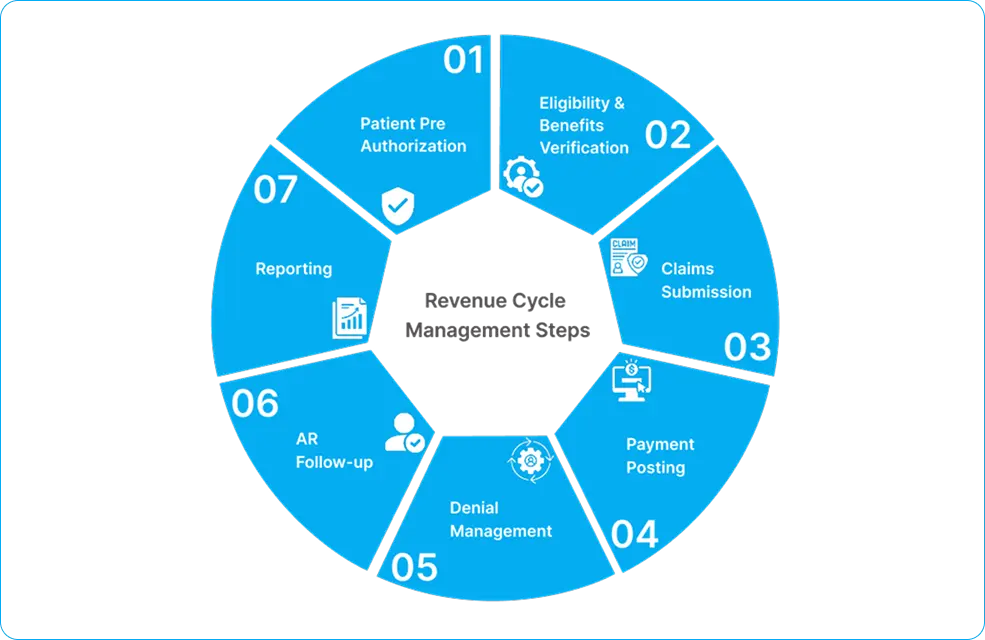
Medical billing is the claim and payment side of the revenue management cycle (RCM). Billing converts documented services and assigned codes into transactions that insurers process, pay, deny, or return for correction.

Billing work includes:

  • Eligibility checks and benefit details, such as coverage dates, copayments, deductibles, and coinsurance.
  • Claim creation and submission through a clearinghouse using standardized electronic transactions.
  • Follow-up and resolution through denial management, appeals, and patient statements.
  • Payment posting and reconciliation using electronic remittance data, then 
  • A/R monitoring using aging buckets such as 0–30, 31–60, 61–90, and 91+ days.

HIPAA required national standards for electronic health care transactions to improve administrative efficiency. That requirement is the reason billing teams speak in transaction terms, such as claim submission and remittance advice.

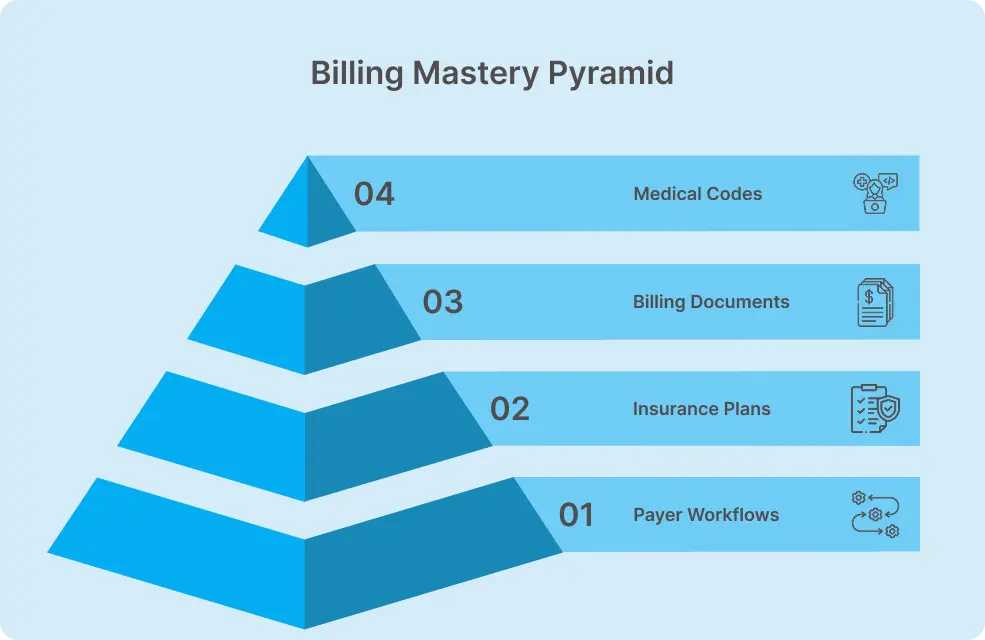
Billing and Coding as One System

What is Medical Billing

Billing and coding are parts of a single chain. A chart that lacks clinical specificity produces coding uncertainty. Coding uncertainty produces claim ambiguity. Claim ambiguity triggers payer edits, requests, denials, or patterns such as upcoding or downcoding that lead to payment disputes.

Data moves through a predictable chain:

  1. EHR documentation
  2. Code assignment
  3. Claim formatting
  4. Clearinghouse edits
  5. Payer edits and adjudication
  6. Remittance and posting
  7. A/R follow-up and patient billing

Each link depends on the prior link. A clean workflow reduces rework.

HIPAA Checklist for Clean Claims

HIPAA electronic standards define how covered entities exchange claims and related data. That standardization is why the claim journey looks similar across specialties.

A patient visit becomes a paid claim in 7 operational stages.

1) Eligibility and Benefit Verification

Eligibility answers coverage status. Benefit detail answers financial responsibility. Errors at this stage create patient balance shock and increase self-pay collections work.

Outputs to capture in the patient account:

  • Plan name, member ID, group ID
  • Copayment amount
  • Deductible status and remaining amount
  • Coinsurance percentage
  • Referral and authorization requirements

2) Referral Management and Prior Authorization

Referral and authorization rules vary by payer and plan type. A missing authorization leads to a denial that cannot be appealed without retro-authorization documentation.

Documentation that reduces disputes:

  • Authorization number
  • Approved CPT or service categories
  • Approved units and date span
  • Ordering provider details

3) Provider Documentation and Records Integrity

The HIPAA Privacy Rule applies to covered entities and sets national standards to protect individually identifiable health information. Documentation integrity has two billing outcomes: it supports code selection, and it supports audit defense.

A documentation set that supports payment contains the following:

  • Chief complaint and history elements
  • Objective findings and test results
  • Assessment with diagnosis specificity
  • Plan with orders, prescriptions, procedures, and follow-up
  • Start and stop times when time drives selection

4) Diagnosis Coding with ICD-10-CM

ICD-10-CM codes classify diagnoses used in patient care reporting and payment logic. Diagnosis coding impacts medical necessity checks, risk models, and coverage rules.

A diagnosis workflow that reduces denials applies 3 checks:

  • Specificity check: laterality, acuity, episode of care, complications
  • Clinical evidence check: symptoms, results, and assessment alignment
  • Linkage check: diagnosis supports the billed service category

5) Procedure and Service Coding with CPT and HCPCS

CPT defines professional services. HCPCS Level II covers products and supplies not in CPT.

Procedure selection becomes stable when the record contains:

  • Clear description of what was done
  • Site and technique details for procedures
  • Units, dosage, and route for drugs and supplies
  • Time documentation for time-based services

6) Modifier and POS selection

CMS maintains the Place of Service code set, including telehealth POS 02 and POS 10 definitions. POS influences pricing logic because payers price differently for facility and non-facility settings.

Modifier logic exists to clarify circumstances not visible in base codes. Modifier mistakes trigger bundling conflicts, duplicate logic, or component billing issues.

7) Claim Creation, Scrubbing, Submission, and Adjudication

Claims are transmitted as standardized electronic transactions. The 837 is the claim submission transaction, and the 835 is the remittance advice transaction used for payment explanation and adjustment reporting.

After submission,

  • Clearinghouse edits check structure and required fields.
  • Payer edits check coverage, bundling, units, frequency, diagnosis linkage, and policy rules.
  • The remittance returns payment, denial, or a request path signaled by reason and remark codes.

Major Code Sets in Medical Billing

The code set ecosystem is regulated and maintained by defined organizations.

CPT Codes

The American Medical Association describes CPT as a listing of terms and five-digit codes that primarily describe medical services and procedures performed by physicians and other qualified health care professionals. 

Operational impact:

  • E/M selection determines visit-level reimbursement.
  • Procedure coding determines paid line items.
  • Category rules determine whether add-on services are separately payable.

ICD-10-CM

The Centers for Disease Control and Prevention describes ICD-10-CM as a system used to code and classify medical diagnoses.

Operational impact:

  • Diagnosis drives medical necessity edits.
  • Diagnosis specificity reduces “needs more information” requests.
  • Diagnosis linkage supports prior authorization validation.

HCPCS Level II: 

CMS states that HCPCS Level II identifies products, supplies, and services not included in CPT, such as ambulance services and DMEPOS used outside a physician’s office.

Operational impact:

  • Drug J-codes connect to dosage and NDC workflows.
  • Supply codes connect to inventory and charge capture.
  • Technology services such as remote monitoring depend on HCPCS reporting structures.

In facility and hospital-based billing, payment logic also depends on revenue codes that classify departmental services for institutional claims and affect how services are grouped and priced.

POS Codes

CMS publishes POS Codes that define where services are provided, including telehealth and in-home versus outside the home.

Operational impact:

  • POS errors trigger repricing, denials, and recoupments.
  • POS consistency improves payer confidence in claims history.

Modifiers: Important Parameter in Claim Accuracy

Correct coding methodologies aim to reduce improper payments from incorrect code combinations. CMS describes the NCCI program as promoting correct coding methodologies and reducing improper coding, with edits that prevent improper payments. That is why modifier use is not “an optional detail.” Modifier use is a payer-facing explanation that determines whether edits allow separate payment.

A modifier workflow that reduces denials follows 4 rules:

  1. Prove separate work in documentation.
  2. Match the edit type, such as bundling versus component billing.
  3. Match the unit structure, such as distinct sessions or anatomical sites.
  4. Match payer policy because payer-specific requirements override general habits.

High-frequency modifier scenarios:

  • Modifier 25: problem-oriented E/M distinct from a preventive service on the same date, supported by separate documentation elements.
  • Modifier 26 and TC: split professional interpretation from technical performance in diagnostic testing workflows.
  • Modifier 59 and X{EPSU}: distinct procedural service logic used when edits allow separation under defined conditions.

A practice that treats modifiers as “documentation outputs” rather than “billing fixes” produces steadier adjudication.

POS Codes and their Impact on Reimbursement

CMS defines POS 02 as telehealth provided other than in the patient’s home and POS 10 as telehealth provided in the patient’s home. POS influences reimbursement because fee schedules differ across settings.

A POS control process uses 3 checks:

  • Scheduling check: visit type and modality captured before arrival or connection
  • Clinical check: clinician confirms where the patient received care
  • Billing check: POS aligns with claim format and payer telehealth rules

Telehealth errors show up as:

  • POS mismatch with modifier expectations
  • POS mismatch with payer telehealth coverage windows
  • POS mismatch with facility billing rules

Why Claims Get Denied?

CMS describes NCCI edits as preventing improper payments when incorrect code combinations are reported. That same idea extends beyond NCCI. Payers run layered edits that measure internal consistency.

A denial forms when at least one edit condition fails. Denial drivers fall into 5 root cause groups.

1) Identity and eligibility failures

2) Authorization and referral failures

3) Documentation and medical necessity failures

4) Coding and editing failures

5) Format and data failures

A denial management process improves outcomes when it links each denial code to root causes and then fixes the upstream step that produced it.

Pediatric Billing: complex claim patterns

The HIPAA Privacy Rule applies to covered entities and sets national standards for protected health information. Pediatric charts contain immunization details, counseling topics, growth percentiles, and family inputs that raise documentation volume. Pediatric medical billing complexity rises because preventive services and problem-oriented work occur on the same date.

A common pediatric scenario:

  • A child arrives for an annual well visit.
  • The clinician addresses a separate acute condition, such as otitis media symptoms, asthma flare symptoms, or worsening eczema.
  • The chart must separate preventive work from problem-oriented work to support separate reporting.

Operational controls:

  • Separate note sections for preventive counseling versus acute assessment
  • Diagnosis linkage that connects the acute condition to the problem-oriented service line
  • Modifier use supported by documented separate work

Specialty Billing & Coding Rules

The CPT code set describes services performed by qualified health care professionals. Specialty workflows add layers such as diagnostic component splits, global surgical periods, and high-frequency edit pairs.

Specialty billing patterns that trigger denials:

  • Diagnostic testing billed without documented interpretation support
  • Procedure families billed together without edit-allowed separation conditions
  • Units and frequency patterns that exceed payer medical policy thresholds

A specialty control plan uses:

  • Specialty templates that capture the minimum required elements
  • Edit-driven coding checklists based on frequent denial codes
  • Targeted internal audits on the top 20 codes by revenue and the top 20 codes by denial volume
SpecialtyBilling Complexity
CardiologyDiagnostic vs interventional CPTs
Radiology26/TC split billing
PulmonarySpirometry, PFT logic
NeurologyEMG/NCS rules
GIEndoscopy bundling
SurgeryGlobal periods
OphthalmologyEye exam coding
EmergencyE/M leveling

Dental-adjacent specialties, such as orthodontic billing, introduce additional complexity where procedure reporting, documentation standards, and payer coverage rules differ from traditional medical claim patterns.

Documentation: Foundation of Clean Claims

ICD-10-CM is used to code and classify medical diagnoses and is based on defined classification logic. Documentation is the evidence layer that supports that logic.

A “clean documentation” standard includes the following:

  • Diagnoses with specificity, not labels alone
  • Procedure notes with technique details, not summaries alone
  • Orders and results when diagnostics drive decision-making
  • Time statements when time-based coding is used

A chart that contains these elements supports claim stability and audit defense.

How to ensure Effeciency of RCM

Revenue cycle management tracks payment from scheduling through reimbursement. A clean claim is the operational outcome of aligned documentation, coding, and claim formatting.

Clean claim drivers:

  • Charge capture tied to documented services, supplies, and administered drugs
  • Code assignment aligned to guidelines and payer edits
  • Claim scrub rules that match payer rejections, not generic checklists
  • Posting discipline that ties remittance adjustments to contracts and patient responsibility logic

Performance indicators that show progress:

  • First-pass resolution rate
  • Denial rate by root-cause group
  • Net collection rate
  • A/R aging distribution
  • Rework minutes per claim

Billing Errors – Revenue Leakage

The False Claims Act imposes treble damages and penalties for knowingly submitting false claims. Revenue leakage is broader than fraud. Leakage comes from routine operational misses.

Leakage patterns:

  • Underpayments are missed because the posting team does not compare the paid amounts to the payer’s allowed amount and contract fee schedule expectations.
  • Write-offs posted without root cause classification
  • Late appeals that miss payer deadlines due to delayed work queues
  • Unbilled charges caused by broken interfaces, missing charges, or undocumented supplies
  • Patient responsibility drift caused by delayed statements and unresolved coordination of benefits

A leakage control plan connects each adjustment type to a queue owner and a resolution clock.

Compliance Training and Guidelines

The Office of Inspector General explains that establishing and following a compliance program helps physicians submit true and accurate claims and outlines core components for physician compliance programs. The OIG also provides education on fraud and abuse laws, including the Anti-Kickback Statute, and describes penalties and sanctions.

Compliance guardrails that reduce risk:

  • Written policies for coding, billing, refunds, and documentation
  • Role-based access controls in billing and EHR systems
  • Regular internal audits tied to high-risk codes and high-dollar services
  • Incident response steps for overpayments and identified errors
  • Training calendars tied to annual coding updates and payer policy changes

Stark Law resources are maintained by CMS as part of physician self-referral regulation guidance. Compliance work ties billing accuracy to referral and financial relationship rules.

Role of Medical Billing Services

HIPAA standards and the Privacy Rule shape how billing services handle protected health information and electronic transactions. Outsourcing moves operational work to a business associate relationship that still requires controls, policies, access management, and audit readiness.

Work handled by a billing service:

  • Claims submission and rejection correction
  • Denial workflows and appeals preparation
  • Payment posting and reconciliation
  • A/R follow-up and patient statement cycles
  • Credentialing and enrollment support as part of payer readiness workflows, including understanding delegated vs non-delegated credentialing responsibilities between practices, billing entities, and payers.

A vendor mention belongs in a neutral “selection criteria” lens.

  • Security controls and HIPAA business associate agreement terms
  • Proven workflows for edits, denials, and posting discipline
  • Reporting that ties denials to root causes and corrective actions
  • Specialty experience tied to the practice’s top code families

Conclusion

HIPAA required national standards for electronic transactions, and the Privacy Rule sets standards for protected health information. CPT, ICD-10-CM, HCPCS, POS, and payer edits connect documentation to payment logic. 

A practice that treats billing and coding as one system controls denials, stabilizes A/R, and reduces compliance exposure.

FAQs

What is HIPAA, and why does it matter in medical billing?

The Health Insurance Portability and Accountability Act (HIPAA) sets national standards to protect patients’ identifiable health information.

In medical billing, it matters because billing staff routinely access and transmit protected health information during eligibility verification, claim submission, remittance processing, and patient billing—requiring strict compliance to ensure data privacy and security.

How does HIPAA apply to electronic payments and claims?

HIPAA required national standards for electronic transactions. Claims and remittance advice follow standardized transaction formats, including the 837 for claims and the 835 for payment and remittance advice.

Why do billing staff need compliance training?

The OIG states that a compliance program helps physician practices submit true and accurate claims and outlines core compliance components for physician practices. Training operationalizes those components through documentation rules, coding rules, audit routines, and corrective actions.

What role do OIG guidelines play in medical billing?

OIG compliance guidance defines risk areas and provides program structures used by physician practices and billing entities. OIG education on fraud and abuse laws describes prohibited conduct and sanctions.

What is the Stark Law in healthcare billing?

Stark Law is a federal law that prohibits physicians from referring Medicare or Medicaid patients for designated health services (DHS) to an entity with which the physician (or an immediate family member) has a financial relationship, unless a specific regulatory exception applies.

What effect does the Anti-Kickback Statute have on billing?

The Anti-Kickback Statute prohibits offering, paying, or receiving anything of value to influence referrals for services paid by federal healthcare programs.

In billing, claims connected to such prohibited arrangements can trigger audits, repayment demands, penalties, and enforcement actions.

What happens if a practice fails a compliance audit?

When a practice fails a compliance audit, it faces repayment demands, financial penalties, and legal action. Under the False Claims Act, knowingly submitting improper claims can lead to significant fines and enforcement proceedings. Strong documentation and routine internal audits help reduce this risk.

How can practices maintain long-term billing compliance?

Practices maintain billing compliance through written policies, staff training, regular audits, corrective actions, and adherence to Health Insurance Portability and Accountability Act (HIPAA) privacy and transaction standards.


A Comprehensive Guide to Delegated vs Non-Delegated Healthcare Provider Credentialing

Credentialing plays a major role in modern healthcare operations. It decides whether providers can treat patients and receive insurance reimbursement. Healthcare organizations lose money due to billing problems when credentialing is delayed. A lot of providers realize how much money they lose when claims are denied or when payments are late.

People often get more confused about delegated and non-delegated credentialing, which makes the problem worse. Providers, billing specialists, and practice administrators have a hard time figuring out who is in charge of credentialing and how it affects payment. This blog does a good job of explaining both models and helping decision-makers pick the best one based on the size of their practice, how ready they are to comply, and their revenue goals.

What is Credentialing in Healthcare?

Before a provider can bill insurance companies, they must go through the credentialing process, which checks their qualifications. It keeps patients safe and makes sure that rules are followed. Claims are denied, and payments are late if the right credentials aren’t in place.

Primary Source Verification (PSV) is part of the credentialing process. It checks credentials directly from the original sources. These sources are medical boards, schools that train people, and licensing bodies. Standard documents include records of education, training, work history, malpractice, and active licenses.

Credentialing can be done by either the insurance payer or the provider organization, depending on the model used.

Credentialing, Enrollment, and Delegation: What They All Mean

People often mix up credentialing, enrollment, and delegation, but they are not the same thing.

Credentialing is the process of checking a provider’s qualifications.

Enrollment means turning on the provider with an insurance payer and giving them effective dates.

Delegation means giving a provider organization the power to credential someone instead of the payer.

Billing delays happen when these steps are mixed up. A provider may be credentialed but not enrolled, which means that claims can’t be paid yet. This gap causes delays in getting paid and lost income.

Delegated Credentialing

When a payer gives credentialing authority to a qualified healthcare organization, this is called delegated credentialing. The delegated entity follows the rules and standards set by the payer. The payer is still in charge, even though the delegated entity does the work.

Delegated credentialing lets healthcare organizations do credentialing for insurance payers. A formal delegation agreement gives the payer the power to do this. The provider organization is now in charge of checking, following the rules, and reporting.

How Delegated Credentialing Works

Delegated credentialing works because payers sign delegation agreements. These agreements spell out what each party is responsible for, what they need to report, and what the audit standards are. Hospitals, IPAs, ACOs, MSOs, and CVOs are all examples of delegated entities.

Credentialing committees and trained staff take care of internal credentialing processes. Payers get provider rosters, and compliance is checked all the time.

Documents and data needed

Delegated credentialing needs a lot of paperwork. This includes state licenses, board certifications, DEA and CDS registrations, NPDB queries, malpractice insurance, work history, education, sanctions, exclusions, attestations, and disclosure forms. All data must be checked against primary sources and kept in credentialing files so that they are ready for an audit.

Advantages of Delegated Credentialing

Delegated credentialing makes it faster to onboard providers and gives you more control over your operations. Organizations have faster enrollment, fewer delays, and a more efficient revenue cycle. Adding bulk providers cuts down on duplicate work, and accurate directories make it easier for payers to communicate. These benefits help with cash flow and being ready to bill.

Effect of Delegated Credentialing on Finances 

Delegated credentialing cuts down on the time it takes to get paid after enrolling. Faster effective dates lower the risk of losing money. The Medical Group Management Association says that delays in credentialing can cost providers thousands of dollars every day. When done right, delegation can help lower the number of days accounts receivable are open and speed up the time it takes to get the first payment.

Responsibilities of Delegated Credentialing

Delegated credentialing is responsible for compliance. If you fail an audit, don’t keep good records, don’t have enough staff, or make mistakes in your reports, you could lose your delegation status. To stay compliant, businesses need to buy credentialing software, hire trained staff, and do internal audits.

Delegated credentialing is closely watched by the government. The National Committee for Quality Assurance, the Centers for Medicare & Medicaid Services, and the Utilization Review Accreditation Commission all set standards. State agencies also make sure that people follow the rules. Regular audits make sure that credentials are correct and that patients are safe.

During audits, delegated entities are responsible. Mistakes could lead to recoupments or terminations that happen after the fact. Errors in credentialing that lead to billing mistakes raise the risk of noncompliance. Strong internal controls and getting ready for an audit lower liability.

When to Use Delegated Credentialing

Delegated credentialing is best for big practices, hospitals, IPAs, and MSOs. Delegation is most useful for organizations that have a lot of providers, a system for credentialing them, and plans for growth.

Non-Delegated Credentialing

The insurance company is in charge of all non-delegated credentialing. Providers send in applications directly, and the payer checks them and approves them.

In this model, the payer is in charge of credentialing committees, checking credentials, and setting enrollment deadlines. Providers don’t have much say over how things work.

Process of Non-Delegated Credentialing

The steps in the process are submitting an application, checking the primary source, having the committee review it, and getting approval with start dates. Timelines are often longer than 90 to 120 days.

Key Points About Non-Delegated Credentialing

Providers who don’t delegate credentialing have a lower risk of not following the rules and don’t have to do audits. But enrollment is taking longer, control is limited, and timelines are set by the payer.

It’s common for bills to be late. Claims that are sent in before the effective date are not accepted. Cash flow is messed up, and making money takes longer.

The payer is in charge of making sure that the credentials are correct. Providers are still at risk if they bill without getting approval first. There is still a lot of dependence on documentation.

Delegated vs Non-Delegated Credentialing: Comparison

FactorDelegated CredentialingNon-Delegated Credentialing
AuthorityThe provider organization performs PSVThe payer performs all verification
SpeedFaster enrollment and onboardingSlower, often 90–120+ days
ControlHigh operational controlLimited provider control
Compliance RiskHigher for delegated entityLower for providers
Audit ExposureRegular payer auditsPayer-managed audits
Best FitLarge groups, hospitals, IPAsSmall practices, solo providers

Conclusion

Delegated credentialing speeds up onboarding and makes it easier to grow, but it also means more compliance work. Non-delegated credentialing is safer, but it takes longer and is controlled by the payer. The size of the practice, how ready it is to follow the rules, and how much money it wants to make all play a role in choosing the right model. Making smart choices helps cash flow and long-term growth.

FAQs

Is credentialing with a delegate faster than without one?

Yes, delegated credentialing is usually faster because the provider organization checks the credentials itself. This cuts down on backlogs for payers and speeds up the onboarding process.

Can small businesses become delegated?

Small practices can be delegated, but most don’t have the staff, systems, and audit readiness that are needed. Many people find non-delegated credentialing to be more useful.

Does delegated credentialing ensure reimbursement?

No, delegated credentialing does not guarantee payment. Claims still have to meet the requirements for billing, coding, and payer policy.

How long does it usually take to get credentials?

In non-delegated models, credentialing usually takes 90 to 120 days. When done right, delegated credentialing can speed up timelines.

What will happen if a delegated body fails an audit?

If an audit fails, the person who was delegated may have to make a plan to fix the problem or lose their delegation status. This could also cause delays in payments or getting money back.

Revenue Codes in Facility Billing: Reasons Behind Denials, Underpayments, and Rework

Revenue cycle teams often investigate denials through CPT, HCPCS, and ICD-10 first. Institutional claims fail for a simpler reason in a large share of cases: the revenue code line is missing, invalid, mismatched, or incomplete. A clean UB-04 or 837I depends on revenue codes because revenue codes organize accommodation and ancillary charges into payer-readable service buckets. CMS requires revenue codes in Form Locator 42 (FL 42) to explain each charge line.

Facilities that treat revenue codes as a “billing formality” see predictable operational outcomes:

  • Claim returns and rejections are tied to missing required fields
  • Payment variance tied to misclassified service lines
  • Manual rework tied to unclear charge intent
  • Audit exposure tied to repeated coding pattern defects

A practical approach starts with the payer’s perspective. Payers need three items to adjudicate an institutional service line:

  1. What category of facility service is billed (revenue code)
  2. What procedure or item is billed (CPT/HCPCS, when required)
  3. Why the service is medically necessary (diagnosis and related claim context)

Revenue codes supply item (1). Revenue codes do not replace CPT, HCPCS, or ICD-10. Revenue codes define the revenue center category that tells a payer what the line represents in a facility charge structure.

What is a Revenue Code?

A revenue code is a numeric code reported on an institutional claim to identify accommodation charges (room/board categories) and ancillary charges (department-style categories such as lab, radiology, and emergency). CMS describes FL 42 as the place where the provider enters revenue codes to identify “specific accommodation and/or ancillary charges” and to explain each charge in FL 47.

Revenue codes live on UB-04 and 837I

Paper claim (UB-04 / CMS-1450)

Revenue codes go in FL 42. CMS sets submission mechanics that facilities often miss during charge build and claim edits:

  • A claim has no pre-printed “Total” line in the charge area. The facility enters revenue code 0001 to represent totals.
  • Revenue codes are listed in ascending numeric sequence and not repeated on the same bill “to the extent possible.”
  • Summation at the “zero” level is used to limit line items (example: billing at 0450 rather than multiple 0451–0459 lines, when payer rules allow).

Electronic claim (HIPAA 837I)

Revenue codes appear at the service line in the SV2 segment, where SV201 carries the revenue code in many 837I implementations and companion guides.
Operational takeaway: a facility can pass UB-04 edits on paper and still fail EDI edits if the SV2 service line is missing, mis-mapped, or split incorrectly across loops.

Official Source of Revenue Codes

Revenue codes belong to the UB data set governed by the National Uniform Billing Committee (NUBC). CMS references NUBC as maintaining lists of approved coding for the UB-04 claim.
NUBC states that the Official UB-04 Data Specifications Manual is the official source of UB data specifications and that other publications should not be treated as authoritative.
HL7 terminology references point out that UB-04 revenue codes are part of the UB-04 data file and are the property of the American Hospital Association (AHA).

Governance creates an operational rule: code validation must track NUBC changes. A claim scrubber that only checks “4 digits exist” misses retired, reserved, or payer-disallowed codes.

How Revenue Codes Control Claim Acceptance

1) Revenue codes drive basic completeness edits

A facility claim line with a charge amount needs a revenue code that explains the charge category. CMS frames this directly: the revenue code in FL 42 explains each charge in FL 47.
Missing revenue codes trigger:

  • Clearinghouse rejections (required segment missing)
  • Payer front-end rejections (invalid billing data)
  • Internal bill edit failures (line cannot route to pricing)

2) Revenue codes trigger code-pairing requirements

Some revenue codes require HCPCS, units, dates, or other supporting detailss. CMS manuals show revenue-code-specific requirements in program instructions.

Example pattern from CMS home health billing instructions:

  • Revenue code 0274 requires an HCPCS code, date of service, units, and a charge amount.
  • Therapy revenue codes such as 042x, 043x, and 044x require therapy HCPCS codes, service dates, units, and charges in that context.

Revenue-code-driven requirements exist beyond home health. The broader point stays stable: revenue code selection can create or remove a requirement for HCPCS detail in payer edits.

3) Revenue codes protect payment classification

Institutional pricing logic uses line classification. Misclassification drives:

  • Underpayment through packaging logic or rate table routing
  • Overpayment risk through incorrect category routing
  • Denial risk through revenue-to-procedure mismatch edits

A revenue code error can pay at $0, pay at a reduced allowable, or pay but fail post-pay review.

Revenue Code Structure and Its Evaluation

Revenue codes are commonly displayed as 4 digits, with leading zeros used in many ranges (example: 0450). CMS describes them as numeric revenue codes entered in FL 42.
Operational interpretation inside a CDM and charge capture workflow usually follows two levels:

  • Zero level (0xxx ending in 0): broad category rollups used for summarization
  • Detail level (0xxx ending in 1–9): subcategories used for payer routing or internal reporting

CMS explicitly references “sum revenue codes at the ‘zero’ level to the extent possible” to limit line items.

Revenue code ranges, and examples of facilities see daily

Facilities commonly map departments and cost centers into revenue code families, such as:

  • 010x: room and board categories
  • 030x: laboratory categories
  • 045x: emergency categories
  • 036x: operating room categories

Industry-facing UB-04 guides frequently cite examples like 0450 (emergency room), 0300 (lab), 0360 (operating room). Treat these as examples, then validate against the NUBC manual and payer rules for production billing.

Revenue codes vs CPT, HCPCS, and ICD-10:

Revenue code vs CPT/HCPCS

Revenue codes classify the facility category. CPT/HCPCS identifies the specific procedure, service, supply, or drug. The relationship is not optional on many lines because payers validate consistency.

A practical alignment checklist uses 3 tests:

  1. Category match: the revenue code family matches the department/service category implied by the CPT/HCPCS.
  2. Detail match: the revenue code detail level supports the procedure type and site-of-service context.
  3. Requirement match: the revenue code does not create a missing-field error (HCPCS, units, date, modifiers).

Therapy and supply examples in CMS guidance show that the revenue code can determine whether HCPCS is required in certain billing contexts.

Revenue code vs ICD-10

ICD-10 diagnosis codes support medical necessity and clinical context. Revenue codes do not describe diagnosis. Revenue codes describe the billing category for the charge line.

Payers cross-validate all three dimensions during adjudication. Mismatch patterns that create edits include:

  • Emergency revenue codes paired with non-emergency service patterns on the same line
  • Lab revenue codes paired with non-lab HCPCS patterns
  • Pharmacy/supply revenue codes are missing a required HCPCS on payer rule sets

Practical Examples of Revenue Code Categories

Revenue code categories differ by facility type. Hospitals bill a wide rangeacross inpatient and outpatient. ASCs focus on outpatient surgical charge lines. Hospital-based clinics and provider-based departments use a narrower set tied to clinic, ancillary, and packaged services.

Accommodation (room and board)

Accommodation revenue codes represent inpatient room categories and related charge structures. Common charge line items include:

  • semi-private room charges
  • private room charges
  • nursery charges

Intensive care and specialty units

Higher acuity units often use their own accommodation categories for internal cost accounting and payer contract reporting.

Charge line items include:

  • ICU room charges
  • CCU room charges
  • burn unit charges
  • NICU room charges

Ancillary services

Ancillary departments generate high-volume.

Charge line items include:

  • laboratory panels and tests
  • imaging exams and reads
  • pharmacy dispensing and infusion supplies
  • respiratory therapy services

Therapy services

Therapy revenue codes frequently drive units’logic and therapy service definitions in payer edits.

Charge line items include:

  • physical therapy timed units
  • occupational therapy timed units
    Speech-language pathology timed units

CMS shows therapy revenue code families (042x, 043x, 044x) tied to HCPCS, dates, units, and charges in its billing instructions context.

Emergency, observation, and outpatient clinic services

Outpatient and emergency billing often triggers front-end edits tied to visit reason fields and revenue code families. CMS notes specific outpatient claim situations where the patient’s reason for visit becomes required when certain revenue codes (example: 045x) are present on certain bill types.

Revenue Code Workflow

Revenue code errors rarely begin in the coder queue. Errors often start in charge capture and CDM mapping.

Step 1: Charge capture assigns a charge line

Origin points include:

  • EHR charge events (orders, administrations, documentation triggers)
  • OR and anesthesia systems
  • pharmacy dispensing systems
  • lab and radiology systems

Each charge event must map to:

  • a charge code
  • a revenue code
  • a CPT/HCPCS (when required)
  • units and date logic

Step 2: CDM mapping routes charge lines to revenue centers

CDM defects create recurring denial patterns. Common CDM defects include:

  • Revenue code defaulted to 0000 or blank
  • Revenue code family assigned at the wrong level (0450 vs 0459 patterns)
    Revenuee assigned to a supply line that requires HCPCS, but HCPCS mapping is missing

Step 3: Claim edit and scrubber validation

A scrubber needs more than “4 digits exist.” A production-grade edit set checks:

  • valid revenue code for the claim date range (no retired codes)
  • payer-specific disallowed codes (reserved ranges or plan exclusions)
    Revenue-to-HCPCSS pairing rules
  • revenue-to-units rules
  • revenue-to-bill-type rules

Step 4: EDI build (837I) places the revenue code in SV2

837I companion guides and X12 segment references tie the revenue code to the SV2 service line structure. Missing SV2 data causes rejections even when the UB-04 print image looks correct.

Managing Revenue Codes as a Revenue Integrity Program

A facility revenue code program works as a controlled system, not a training memo.

1) Governance: define a source of truth

NUBC publishes the official UB-04 specifications through the Official UB-04 Data Specifications Manual.
Governance tasks that prevent drift:

  • Quarterly review of NUBC updates against CDM tables
  • controlled change tickets for revenue code mapping
  • payer policy addenda applied as payer-specific edits

2) Training: focus on failure modes, not code memorization

Training outcomes improve when training content matches denial patterns. Training topics that map to measurable outcomes:

  • FL 42 and 0001 totals rule
  • Revenue family ↔ HCPCS pairing rules
  • zero-level vs detail-level billing decisions
  • EDI placement checks (SV2)

CMS defines key FL 42 rules, such as ascending order and 0001 totals.

3) Audits: run 3 audit layers each month

Layered audits catch defects at the point of entry.

Layer A: CDM audit (mapping integrity) List of charge codes with missing revenue codes

  • List of charge codes with revenue codes outside payer-allowed lists
  • List of charge codes where the revenue code implies HCPCS requirement, but HCPCS mapping is blank

Layer B: Claim sample audit (billing integrity)

  • 30 inpatient claims, 30 outpatient claims, 30 ASC claims
    Compare FL 42 lines to charges and procedure lines
  • confirm totals line 0001 exists where required by format rules

Layer C: EDI audit (837I integrity)

  • Compare UB-04 print image line items to SV2 line items
  • Confirm SV201 presence for each billed line per the companion guide mapping

4) Denial analytics: classify denials by revenue-family root cause

A denial code alone does not reveal the defect source. Revenue-family-based analytics isolates defects:

  • 045x family denials tied to visit reason fields and outpatient edits
  • therapy family denials tied to missing HCPCS/units
  • Supply family denials tied to HCPCS requirements

Conclusion:

Revenue codes sit in the small field that controls large outcomes. CMS requires revenue codes in FL 42 to identify accommodation and ancillary charges and to explain each charge line.
A facility that manages revenue codes through CDM governance, scrubber logic, EDI reconciliation, and denial analytics reduces avoidable returns, prevents under-classification, and limits recurring rework. NUBC governance and official UB specifications provide the compliance anchor for that program.

Frequently asked questions

Are revenue codes required for outpatient institutional claims?

Institutional claims use revenue codes to explain accommodation and ancillary charges in FL 42 for UB-04 billing rules.

Can a facility bill a revenue code line without CPT/HCPCS?

Some payer rules allow revenue-only lines for certain charge categories. Other payer rules require HCPCS on lines tied to specific revenue codes or benefit types. CMS examples show revenue-code-driven HCPCS requirements in certain billing contexts.

Where do revenue codes go on the 837I?

837I service lines use the SV2 segment in loop 2400 in many implementations, with SV201 carrying the revenue code in common companion guide mappings.

Where is the official revenue code list published?

NUBC directs users to the Official UB-04 Data Specifications Manual as the official UB data source.

Does revenue code order matter on a UB-04?

CMS instructs providers to list revenue codes in ascending numeric sequence and avoid repeating them on the same bill to the extent possible.

Orthodontic Billing Guidelines: How to Code and Get Paid

Orthodontic billing varies depending on the clinical, payer, and accounting perspectives. A clean billing system links all 3 parameters, so case fees, claim timing, and insurance rules stay aligned through months of treatment.

Orthodontic Billing vs General Dentistry Billing

Orthodontic billing works when teams track the full case, the stages, and the payer rules at the same time. General dentistry bills are per visit; orthodontics bills have a longer treatment timeline with staged payments.

Case fee accounting vs per-procedure billing

An orthodontic contract uses a global case fee that covers phases such as appliance placement, adjustment visits, and retention. Revenue leakage starts when the office collects a case fee schedule from the patient but submits claims with inconsistent dates, codes, or months of treatment.

A practical control is a case ledger that splits the total fee into 3 buckets:

  • Start-of-case balance tied to appliance placement
  • Progress balance tied to periodic visits
  • Finish/retention balance tied to appliance removal and retainer delivery

CDT Coding for Orthodontics

Orthodontic coding needs a payer perspective and a documentation perspective. The payer wants correct category selection and consistent reporting across months; the chart needs clear proof of what phase the patient is in.

Types of Orthodontic Treatment Codes

Orthodontic treatment codes are classified into:

  • Limited orthodontic treatment: D8010–D8040 (primary, transitional, adolescent, and adult dentitions).
  • Comprehensive orthodontic treatment: D8070–D8090 (transitional, adolescent, and adult dentitions).

Orthodontic Coding Updates

Coding choices changed in 2022. The AAO notes D8050 and D8060 were deleted as interceptive orthodontic treatment codes starting Jan 1, 2022, and reports shifts into the limited orthodontic treatment framework.

“Visit and Retention” Orthodontic codes

Orthodontic billing also uses:

  • D8660 for a pre-orthodontic exam focused on monitoring growth and development.
  • D8670 for a periodic orthodontic treatment visit.
  • D8680 for orthodontic retention is tied to appliance removal and retainer delivery.

Eligibility, Benefits, and Limits Checks before Treatment

Coverage looks different from plan to plan, so a single-perspective check fails. A clean verification combines the member portal, the plan document, and the benefits call reference.

Run an eligibility check that captures these benefit limits in writing:

  • Waiting periods for orthodontics
  • Age limits for dependent vs adult orthodontics
  • Lifetime maximum (common in orthodontics) rather than an annual max
  • Coinsurance percentage and deductible rules
  • Appliance exclusions stated by the plan (aligners, lingual systems, branded systems)

A prevention rule helps: coverage gets documented before diagnostic records get converted into a final case start date.

Orthodontic Billing Lifecycle

Long treatment timelines create more failure points, so the workflow needs fixed checkpoints. A reliable lifecycle uses 4 checkpoints that match how payers approve orthodontics.

1) Build the case file before preauthorization

Preauthorization success relies on complete records, not narrative fluff. Case packets typically include:

  • Clinical notes describing malocclusion and functional findings
  • Diagnostic records such as radiographs, photographs, and models
  • Treatment plan with estimated months of treatment

2) Lock the appliance placement date as the anchor

Orthodontic payers often anchor the case to the date the appliance was placed and the months of treatment reported on the claim. The ADA claim form completion instructions state:

  • Item 40 flags orthodontic treatment
  • Item 41 reports the Date Appliance Placed
  • Item 42 reports the Months of Treatment

This anchor date must remain consistent across banding/bonding and later progress claims.

3) Submit active treatment claims with consistent phase logic

Active treatment billing stays stable when the team uses:

  • A single primary treatment code for the case category (limited vs comprehensive)
  • Periodic visit coding that matches the payer’s rules for installment reimbursement
  • A payment posting routine that reconciles expected vs paid amounts per month

4) Close out retention and reconcile balances

Retention billing often uses D8680 for appliance removal and retainer construction/placement.
Case closure needs a final reconciliation across:

  • Insurance paid to date
  • Remaining lifetime maximum
  • Patient balance under the financial agreement

How to Submit an Effective Orthodontic Claim 

Claims succeed when clinical documentation and claim fields match. A high-clean-rate process uses a pre-submission checklist rather than “fix it after denial.”

Orthodontic claim checklist (12 fields that drive denials)

Use this list before clicking submit:

  • The patient’s name and DOB match the eligibility file
  • Subscriber ID and group number match the plan
  • Billing NPI and taxonomy match payer enrollment
  • Treating provider fields match the chart and schedule
  • Correct CDT code for the limited vs comprehensive category
  • The appliance placement date is recorded once and reused consistently
  • Months of treatment match the treatment plan estimate
    The appliance
  • The total case fee matches the patient contract
  • Initial payment and installment structure documented
  • Enclosures flagged correctly (radiographs, images, narratives)
  • Predetermination reference number stored in the case file
  • Progress notes support ongoing care for periodic claims

Coordination of Benefits for Two Dental Plans

Two-plan billing needs a payer perspective and a compliance perspective. COB breaks when the team submits out of order or posts payments incorrectly.

A stable COB workflow uses 5 actions:

  • Identify primary vs secondary payer using plan rules
  • Submit to the primary payer first
  • Post the primary EOB to the ledger
  • Submit secondary claim with the EOB attached
  • Reconcile the patient balance after both responses

COB errors trigger outcomes such as overpayment recovery, denial for duplication, and audit exposure.

Denials: the patterns and the fixes

Denials look random from one claim, but patterns show up across 20–50 cases. A denial log turns “rework” into prevention.

Denial causes that repeat in orthodontics

  • Wrong category code (limited vs comprehensive mismatch)
  • Appliance placement date mismatch across claims
  • Months-of-treatment mismatch across claims
  • Missing records for medical necessity reviews in benefit plans that require it
  • Eligibility errors tied to waiting period, age cap, or lifetime max exhaustion

Fix the system that reduces repeat denials

  • Resubmit with corrected fields and the same anchor dates
  • Appeal with a structured packet: records, narrative, plan rule reference, and timeline
  • Audit 10 random ortho cases per quarter for date and code consistency

Patient Financial Responsibility:

Patient responsibility becomes predictable when the office documents the same numbers in 3 places: contract, ledger, and claim.

A typical patient balance contains:

  • Deductibles and copays
  • Coinsurance percentage
  • Lifetime max overage after the plan pays its cap
  • Installment schedule tied to the case timeline

Example scenario: Case fee $6,000. Ortho lifetime max $1,500. Insurance pays $1,500 total across the case. Patient responsibility becomes $4,500, split into a start payment plus monthly installments.

Conclusion

Orthodontic billing protects revenue when codes, dates, and documentation stay consistent for the full case timeline. A controlled workflow uses one anchor date, one treatment category decision, and a denial log that turns payer feedback into process fixes.

FAQs

What are the “three M’s” in orthodontics?

The “three M’s” are muscles, malformation, and malocclusion, described in classic orthodontic literature.

How does the dental billing process work?

Dental billing follows a repeatable cycle: document services, assign correct CDT codes, submit claims, track payer responses, post payments, and manage remaining accounts receivable.

What are 4 operational steps in the claim process inside a dental office?

  • Build the claim from documentation and codes
  • Submit the claim to the payer with the required attachments
  • Adjudicate by checking status and responding to requests for records

Post and reconcile payments, denials, and patient balances

Allowed Amount on Health Insurance in Medical Billing

Healthcare practitioners often review reimbursements and notice that payments are lower than billed charges. This gap usually comes from the authorized amount, which is the maximum reimbursement insurance gives consent to pay. When this concept is misunderstood, it leads to claim denials, unanticipated patient balances, and weak revenue collection.

CMS finalized two separate 2026 Medicare Physician Fee Schedule conversion factors:

  • $33.57 for qualifying APM participants
  • $33.40 for non-qualifying APM clinicians

These numbers matter because many commercial contracts index pricing to Medicare benchmarks.

What is the Allowed Amount in Medical Billing?

The allowed amount in medical billing is the maximum reimbursement an insurance plan will pay for a healthcare service. It is set by payer policies, provider contracts, and network status. This amount determines how much the provider will be paid and how much the patient will have to pay. The conversion factor for physician fees in 2026 is $32.35, which is a 2.83% decrease from the previous year. The allowed amount is not the amount that was billed; it is the amount that insurers use to process claims.

Allowed Amount vs. Amount Billed

The amount billed is the amount the provider charged that is shown on the claim. The allowed amount is the maximum amount that the insurance company will pay. For in-network providers, the difference is either a contractual adjustment or a write-off. The allowable amount, not the billed charge, is used to figure out patient cost-sharing, which includes copays, coinsurance, and deductibles. If this difference isn’t clear, it can make things harder for patients and lead to billing disputes.

Allowed Amount and Allowable Charge in Insurance

People often mix up the terms “allowed amount” and “allowable charge,” but they mean different things. The agreed-upon rate that was approved after the claim audit is the allowed amount. The allowable charge is the highest amount that an insurance policy will pay. Both are related to payer agreements and reimbursement rates, but knowing the difference can help you avoid making mistakes on claims and expecting the wrong amount of money.

How to Calculate the Allowed Amount in Medical Billing

How to Calculate the Allowed Amount in Medical Billing
Allowed Amount = Insurance Payment + Patient Responsibility + Contractual Write-off

Insurance Payment

Amount paid by payer

Patient Responsibility

Copay + Coinsurance + Deductible

Contractual Write-off

Billed minus Allowed per contract

Billed $500 → Allowed $400 → Insurance $320 + Patient $80 + Write-off $100

The allowed amount or allowed charges are based on payer contracts, correct coding, and plan rules. It depends on the fee schedules, the rates that were agreed upon, and the insurance coverage policies. Billing teams don’t figure it out from scratch; instead, they check it against the billed charge using reimbursement calculations. Correct identification makes sure that postings are correct and that revenue is not lost.

Formula to Calculate Allowed Amount

Core formulaAllowed Amount = Insurance Payment + Patient Responsibility + Contractual Adjustment
ExpandedAllowed = Paid by Payer + (Copay + Coinsurance + Deductible) + Write-off

Components of Allowed Amount Formula

Insurance Payment: Amount the payer actually reimburses to the provider.

Patient Responsibility: Portion assigned to the patient (copay, coinsurance, deductible).

Contractual Adjustment (Write-off): Difference between billed and allowed that must be written off per payer contract.

Copay: Fixed amount the patient pays per visit/service.

Coinsurance: Percentage of the allowed amount the patient must pay.

Deductible: Amount the patient pays out-of-pocket before insurance starts paying.

Write-off (Contractual Adjustment): Non-billable difference between billed and allowed per contract.

Example Calculations

Consider a provider charge of $500 for an MRI. Under the insurance contract, the maximum permissible amount is $400. With 80% coverage, the insurer pays $320. The remaining $80 becomes patient’s responsibility, depending on the deductible application. This example shows how allowed amounts directly affect both insurer payment and patient costs. When these calculations are not monitored correctly, practices often struggle with underpaid insurance claims and delayed collections.

State Variations in Medicaid Allowed Amounts

Medicaid reimbursement rates vary by state. CPT 99213 may pay differently under Medi-Cal versus national median rates. Alaska shows higher reimbursement, while other states pay less. Orthopedic procedures show wide variation.

Role of Insurance Contracts and Fee Schedules 2026

Insurance contracts and charge schedules define allowable amounts. In 2026, CMS set the Medicare physician fee schedule conversion factor at $32.35. CPT codes are reimbursed based on Medicare benchmarks, geographic variation, and provider type. Private payers may reimburse at 110% to 150% of Medicare rates. Contracts also define reimbursement percentages, multiple procedure rules, and provider write-offs.

Patient Impact and Balance Billing

When billed prices go over the allowed amount, patients have to pay more. Cost-sharing within the network is still predictable, but balance billing outside the network leaves patients with unpaid differences. Patients are less likely to get surprise bills and more likely to trust you if you understand this.

Common Allowed Amount Mistakes

If you make mistakes with the authorized amount, your payments will be late and your claims may fall into reimbursement discrepancy claim reviews. To protect revenue, administrative processes must make sure that verification is correct. Taking care of problems early on cuts down on patient disagreements and makes it easier to protect revenue.

According to CMS data, 12% of outpatient denials are due to differences in prices. Outdated insurance databases, payer contract mismatches, and CPT coding mistakes are some of the things that can lead to wrong allowed amounts. Mistakes made when entering data by hand make denial more likely.

How to Fix Billing and Patient Disputes

Different payers make different types of plans and CPT codes. Different plans may let you pay different amounts for the same service. When payer-specific databases are not updated, billing can get confusing. Training staff and having a strong verification process help cut down on mistakes.

A lot of the time, patients complain about high costs, especially when they are out of network. In 2026, 18% of complaints about billing were about balance billing. Clear communication about patient intake, cost estimates, and financial education can help avoid disagreements.

Conclusion

To make sure that medical billing is correct and that you get paid, you need to know what the allowable amount is. It sets limits on how much an insurer can pay and how much a patient has to pay. Mistakes can cause claims to be denied, patients to argue, and money to be lost. Following payer rules, sticking to contracts, and teaching patients about their options all help keep finances stable.

The allowed amount is what makes reimbursement correct. Keeping an eye on EOBs, updating contracts, and lowering denials all help keep money coming in. A clear understanding builds trust with patients and helps keep their finances healthy in the long run.

Frequently Asked Questions

What is an amount that is okay?

A health insurance company’s or payer’s “allowed amount” is the most money they will pay a healthcare provider. You might hear it called a payment allowance, eligible expense, or negotiated rate. Providers who are in the network will accept it as full payment, but providers who are not in the network may balance bill. Copays, coinsurance, and deductibles apply to this amount.

Why are the allowed amounts significant?

Allowed amounts help standardize healthcare costs and prevent unexpected bills. They improve reimbursement transparency and protect patients. Providers gain clarity on insurer payments, supporting fair billing.

What “Allowed Amount” Really Means

The allowed amount is not the billed charge. It is the ceiling used for payer payment calculation and patient cost-sharing. Out-of-network claims may use UCR benchmarks. The No Surprises Act limits balance billing in protected cases.

How Allowed Amounts Affect Reimbursements and Patient Costs

Reimbursement ceilings control insurer payments. Contractual write-offs apply to in-network agreements. Out-of-network billing may lead to underpayments and denials. MGMA data from 2024 shows rising denial rates tied to these issues.

How do the payers choose the allowed amount?

Payers use CPT code pricing, the Medicare Physician Fee Schedule, RVUs, the conversion factor, and GPCI adjustments. Medicaid fee schedules change by state. Business PPO plans rely on contracted rates or benchmarks based on UCR. NSA protections apply in specific cases.

How To Calculate The Allowed Amount

Allowed amount calculations rely on payer contracts and insurance payments. Patient responsibility is applied after identifying the allowed amount. Accurate calculation avoids disputes and underpayments.

How to Check an EOB for Accuracy?

An Explanation of Benefits should be reviewed for CPT and HCPCS verification. Network status must be confirmed. Deductible and copay accuracy should be checked. Coinsurance recalculation helps detect underpayment escalation.

What is the accepted amount vs. the billed amount?

The billed amount is what the provider charges on the claim, but the allowed (accepted) amount is the payer’s contracted rate used to calculate payment and patient responsibility.


Terms to Know
MPFS (Medicare Physician Fee Schedule)MRI (Magnetic Resonance Imaging)EOBs (Explanation of Benefits)
UCR (Usual, Customary, and Reasonable)RVUs (Relative Value Units)MGMA (Medical Group Management Association)
GPCI (Geographic Practice Cost Index)NSA (No Surprises Act)CMS (Centers for Medicare & Medicaid Services)
Terms explained in the Glossary.

Payer Monitoring the Frauds: Upcoding and Downcoding

Monitoring for fraud by payers is now a significant component of healthcare-related payment integrity programs. Some of the most problematic items that are under intense scrutiny by payers are downcoding and upcoding.

Upcoding results in overpayment due to the overreporting of the level of care. Downcoding leads to underpayment due to the underreporting of the level of care. Although the practices differ in terms of their impact, they both create issues with accurate billing and compliance. Such practices in billing involve manipulating the codes submitted to Medicare, Medicaid, or private insurers to inflate reimbursement. Payers employ structured observation in the monitoring and correction of this process.

This blog highlights how the payer utilizes data and analytics to detect and monitor any fraudulent practices, identify the key indicators that lead to audits, and demonstrate how accurate payment decisions can be made with the help of clinical validation documents. Furthermore, how monitoring techniques are changing for payers and what providers can do to minimize exposure is also discussed in this blog.

Coding Frauds in Healthcare

What is Upcoding?

A medical billing practice, “upcoding,” is when a provider submits a billing claim using the CPT code that represents a higher degree of service, complexity, or severity than the service that was actually rendered or the complexity recorded as per the ICD-10.

Example

Exaggerating the visit complexity: It includes giving a code for a comprehensive visit to a simple office visit that had a narrow focus.

Overstating the procedure: documenting the code that shows a complex invasive surgery was done while the procedure was simple or non-invasive.

Reporting more time spent: the evaluation and management codes were applied to a small encounter visit.

Misuse of Modifiers: Use of modifiers to indicate separate or additional service when they are part of the basic service.

Importance

Upcoding is regarded as incorrect billing and leads to a larger reimbursement. It is categorized as healthcare fraud when it is done intentionally, and when done unintentionally, it leads to:

Claims denial

Recoveries of payments

Risk of compliance and audits

What is downcoding

Down-coding is a form of medical coding where a provider assigns a code for a service or complexity that is lower than that which was provided and documented. Resulting in receiving a payment that is less than the service provided.

Example

A complex evaluation and management visit will be reimbursed similarly to a lower-level office visit.

A procedure requiring advanced care will be coded as a basic service.

Importance

Although downcoding can lead to decreased payments from Medicaid or other insurance companies, downcoding also poses various issues, like, for example,

Distort Utilization Data and Quality Data

Affect risk adjustment and quality metrics

Indicate compliance gaps, workflow issues, or payer-driven behavior.

Why Payers Monitor Coding Fraud

Financial Influence on Healthcare Payments

Improper coding directly impacts health care expenditures. Due to upcoding, overpayments occur by the payers; when it comes to downcoding, there are underpayments along with incorrect cost information.

For the public programs like Medicare and Medicaid, there are also issues regarding the sustainability of taxpayer-funded healthcare due to improper payments.

Compliance and Regulatory Requirements

Payers have the power to detect and prevent fraud, waste, or abuse (FWA). The key governmental organizations that require health plans to have fraud monitoring programs include the Centers for Medicare & Medicaid Services (CMS) and the Office of Inspector General (OIG).

Lack of monitoring for coding practices may result in regulatory findings, penalties, and corrective action plans for the payers.

Impact of Frauds

On practices

For healthcare organizations, errors in coding lead to elevated risks of audit, denial, or recoupment of payments. Organizations with practitioners exhibiting uniform errors in coding will heighten risks of prepayment audit, documentation inquiry, or strained relationships with insurers.

The administrative burden will also increase because of the additional staff time that will go into responding to audit inquiries and appeals.

On Patients

Inaccurate coding can impact patient records, quality reporting, and care analytics. Inaccurate coding can contribute to inaccurate risk scores, missed gaps of care, and incorrect cost-sharing estimates. Inaccurate coding over a period of time can impact coverage decisions and care management strategies.

How Payers Monitor Upcoding and Downcoding

Claims Data Review

Claims data serves as the main source for fraud monitoring by payers. The payers analyze billing codes, usage rates, and payment rates to spot anomalies. The analysis revolves around shifts in coding practices, usage rates for high-level codes, and consistency.

The claims are assessed both on an individual basis and in the aggregate to look for patterns rather than random errors.

Rules-Based Claim Edits

Edits based on rules involve automated tests used during claims adjustments. Such edits point out the problems, such as illogical code sequences, excessive use of modifiers, and services exceeding limits of frequency and medical necessity.

Claims that do not meet these tests may be rejected, suspended, or forwarded for reconsideration.

Peer Benchmarking

This benchmarking assesses the provider’s coding practice in comparison to those of similar providers in terms of specialty, geographic area, and practice types. Providers whose coding intensity or volume varies considerably compared to their peers who have similar patients will receive consideration for review. In many cases, this variation is also linked to gaps in provider enrollment and payer credentialing compliance.

Benchmarking allows payers to differentiate between normal variation and possible fraudulent activity.

Common Red Flags Payers Look For

Frequent Use of High-Level Codes

Consistently billing the highest-paying E/M or procedure codes (CPT) is always a red flag, especially when case complexity does not support the use of the code.

Unusual Coding Patterns Compared to Peers

Providers with a coding pattern that varies significantly from peer benchmarks may be identified for further review, whether the codes are higher or lower than average.

Documentations That Do Not Support Codes

Claims are considered unsupported when the medical record does not contain sufficient detail to support the service billed or the code used. One of the most frequent reasons claims fail review is because of documentation gaps.

Clinical Validation and Record Review

Role of Clinical Reviewers

The clinical reviewers, including nurses and certified coders, evaluate whether the medical records support the use of the codes billed. The responsibility of the clinical reviewers is to confirm medical necessity, level of severity, and complexity of services according to specified coding standards.

Documentation Requirements and Gaps

Many findings of fraud are the consequences of poor documentation rather than fraudulent activities. In the case of missing documentation related to the time, judgment, or status of patients, results in claims being denied or incomplete reimbursement.

Complete and accurate documentation leaves less room for audit problems.
Strong record keeping inside the EHR helps prevent repeated errors caused by EHR documentation workflow issues.

Pre-Payment and Post-Payment Monitoring

Pre-payment Claim Edits & Holds

Incorrect payments are prevented through prepayment review. Payment claims that generate automated edits or identify errors or incomplete information are denied and are put on hold until the proper documentation is received.

It helps to curb overpayment but might cause a delay to the provider.

Post-Payment Audits and Recoupments

The process of monitoring happens after the payment of the claims. The payers carry out a retrospective audit, medical records inquiry, and the reimbursement of payments in case of inappropriate coding of the claims.

Often, post-payment audits are required for risk adjustment and high-cost service reviews.

What can be done to reduce risk

Interior Audits & Self-Monitoring

Regular coding audits allow healthcare providers to discover mistakes prior to the discovery of these errors by insurance companies. The process of comparing claims to supporting documentation ensures accuracy and uniformity in the billing process.

Healthcare Providers’ Education and Accuracy in Documentation

Continual education will help keep practitioners knowledgeable about documenting requirements and up-to-date code requirements. Good documentation practices will aid in relevant code selection to withstand audit challenges.

 Clinical Documentation Improvement  for Compliance

Code review, Clinical Documentation Improvement (CDI), and compliance staff work together to make sure that documentation accurately reflects the care given and meets the needs of payers and regulators.

Outsourcing Medical Coding Services

Hiring outside companies to do medical coding work, done by trained and certified coding specialists, can help reduce risks. Third-party medical coders are experts, know the most up-to-date medical coding standards, and are an unbiased source for quality review.

Consequences of Coding & Billing Errors

Claims Review and Request for Records

When there are suspicious claims, the insurance company requests the medical records for further verification. The providers are asked to provide the records within specified time limits.

Payment Adjustments or Denials

Concerns about improper coding will likely result in insurers denying payment, adjusting payments, or recouping overpayments that eventually increase aging accounts receivable in medical practices. This could result in continued monitoring or further audit investigations if persistent errors are identified.

Conclusion

Payers are now more systematic and data-driven when it comes to keeping an eye on upcoding and downcoding fraud. By using rules-based edits and clinical documentation reviews to look over claims data, payers can make sure that payments are made correctly.

From a provider perspective, risk reduction begins with accurate coding and good documentation to support it. As more targeted monitoring is being implemented, elements such as transparency and quality of documentation remain important to maintain accurate payment processes.

FAQ’s

What is reimbursement?

The reimbursement is the process where the providers, practices, and hospitals are paid by the payers for the services they render to the patients registered with them. The payers are the third party: private (e.g., UnitedHealthcare or others) or government (Medicare).

What is the difference between upcoding and downcoding?

Upcoding is a situation where more services are billed for than provided, resulting in an overpayment. Downcoding is where fewer services are billed for than are provided, hence affecting the data.

What are the differences between payer fraud monitoring and traditional claim reviews?

Payer fraud analysis is more focused on analyzing patterns of fraudulent billing, while traditional claims analysis typically analyzes claims individually to check whether they meet certain minimums of validity. Fraud analysis uses analysis, benchmarking, and clinical validation to spot systemic risk.

What are the usual documents assessed in a payer audit?

The medical records are reviewed by the payers for the clinical notes, treatment plans, and diagnosis results, as well as time-based documentation, in order to check if the services are in line with medical necessity and coding rules.

How does payer monitoring impact programs in value-based care?

Accurate coding enables reliable risk adjustment, quality, and performance measures. Unsound coding may impair outcome measures as well as cost measures within value-based payment models.

What is the role of outsourcing medical coding in supporting the efforts for compliance?

Outsourcing the coding processes results in decreased errors and increased audit readiness owing to the expert and up-to-date knowledge of individuals in coding guidelines and independent quality checks.

POS 10 vs POS 02: How to Choose the Right POS Code in Telehealth Billing?

Telehealth billing fails for one simple reason: the claim says “telehealth,” but the POS tells the payer a different story. Revenue teams feel it as denials, underpayments, recoupments, and rework. The global telehealth market reached USD 186.41B in 2025 and is projected to reach USD 1,272.81B by 2034, so POS accuracy has become a direct payment driver.

CMS created POS 10 and updated POS 02 to separate telehealth in the patient’s home from telehealth in every other location. This guide explains the difference, shows how payers use it for reimbursement logic, and gives documentation and workflow rules that reduce denials.

Consequences of Error in Documentation of POS Codes

POS errors create predictable outcomes in adjudication systems:

  • Claim denials from POS mismatch edits
  • Delayed payments from manual review or documentation requests
  • Underpayments when the wrong facility/non-facility rate triggers
  • Revenue loss from write-offs and missed timely filing windows
  • Administrative burden from corrected claims and appeals
  • Audit exposure when the medical record location conflicts with the claim
  • Recoupment demands when post-pay review finds location inaccuracies
  • CMS explicitly notes that POS data is used to pay claims correctly.

What is POS 10?

CMS definition: POS 10 reports telehealth when the patient is located in their home (a private residence, not a hospital or facility).

Effective: POS 10 is effective January 1, 2022, and became available to Medicare on April 1, 2022.

Key Components of POS 10?

The main elements of POS 10 are;

  • Telehealth service delivered through telecommunications technology
  • Patient location = home/private residence
  • Provider and patient are located in different places
  • Professional claim uses POS to drive correct payment logic

When to Use POS 10?

  1. The encounter occurs via real-time video or audio-only telehealth (when allowed)
  2. The medical record confirms the patient’s location = home
  3. Scheduling/intake captures the home location, and the note matches the claim

POS 10 examples (patient location)

  • Patient’s house or apartment
  • Patient’s private residence where care is received (not an institutional facility)

What is POS 02?

CMS definition: POS 02 reports telehealth when the patient is not located in their home during the encounter.
Effective: POS 02 is effective January 1, 2017, with a description change effective January 1, 2022 (and Medicare applicability beginning April 1, 2022).

 Key Components of POS 02

The main elements of POS 02 are:

  • Telehealth delivered through telecommunications technology
  • Patient location ≠ home
  • Documentation must identify the patient location category clearly

Where to Use POS 02?

Use POS 02 when a telehealth service is provided and the patient is not at home. This code is used to show that the patient was located in a non-home setting, which helps payers process the claim correctly.

POS 02 will be applicable when the patient is in:

  • Workplace, school, or public location
  • Temporary lodging (hotel/shelter)
  • Hospital or clinic
  • Nursing facility or long-term care setting

POS 10 vs POS 02 Documentation Rules

Payers deny telehealth claims when the note does not prove location and modality. CMS telehealth guidance for professional billing emphasizes using POS 02 vs POS 10 based on patient location.

Minimum Documentation Checklist (use for every telehealth visit)

Document these items every time:

  • Mode of communication: secure video platform, phone-based audio-only, or other approved method
  • Patient location at time of service: home vs non-home (drives POS 10 vs POS 02)
  • Provider location: facility/office/hospital (helps defend audits)
  • Patient consent for telehealth: include audio-only consent when used
  • Start time, end time, total duration: record time elements when time-based rules apply
  • Medical necessity: clinical reasoning and plan, not only symptoms
  • Technology note: the reason the video was not used during audio-only visits

POS 10 Documentation Requirement

  • Record a clear statement such as, “Patient located at home during the telehealth encounter.”
  • Keep the location statement consistent across scheduling, intake, and the clinician note.

POS 02 Documentation Requirement

  • Record a clear statement such as, “Patient located at [work/school/hospital/nursing facility] during the telehealth encounter.”
  • Capture the location category so a reviewer can confirm “not home” without guessing.

Reimbursement Rates of POS 10 vs POS 02

According to CMS (Centers for Medicare and Medicaid Services), cases under POS 10 are paid at a non-facility rate, and POS 02 cases are at a facility rate. The non-facility rate is usually higher because the provider bears practice overhead. So, POS 02 reimbursement rates are lower than POS 10.

How to Use POS Codes with Modifiers?

Modifiers are extensions used with the original CPT and POS codes to cover more details about the procedure and services provided in a visit. The following are modifiers for POS codes:

  1. Modifier 93: For audio-only services.
  2. Modifier 95: For real-time audio and video telehealth services.
  3. Modifier GT: Some companies used to indicate telehealth services

Key Difference Between POS 10 and POS 02

FeaturePOS 10POS 02
Patient LocationResidenceOther than Home
Billing TypeNon-Facility BillingFacility Based Billing
Reimbursement ImpactPaid at the non-facility ratePaid at Facility Rate
Common LocationPatient’s HomeHospital, Clinic, or Workplace

Practical Guide for POS 10 and POS 02 Billing:

Be careful while billing with POS 10 and POS 02 codes about these parameters:

Location Verification

Location confirmation is very important while using the POS codes. If the documentation fails to verify the patient location, then there is no chance for claim approval. So, at the very first, you should add the location of the patient during the telehealth session with proper proof.

Use Appropriate Modifier

Modifiers are helpful in describing the case more efficiently. That is why the chances of your claim’s instant approval increase when you use an appropriate modifier.

Follow CMS Guidelines

CMS regularly works on the quality and outcomes of the health care system, including health insurance. It updates the billing guidelines from time to time. Checking and following CMS guidelines will update your billing journey by enhancing your claim’s approval ratio.

Conclusion

Telehealth is rapidly growing in this era. With proper use of POS codes and smooth medical billing, you can gain it successfully. POS codes are the codes used to describe where telehealth is provided. POS 10 covers home-based telehealth, and such cases are paid at a non-facility rate. POS 02 visits are paid on the basis of the facility rate. Reimbursement rates for non-facility settings are higher. So, if you understand a clear difference between POS 10 and POS 2, you can get your claims instantly approved with higher rates. Always follow CMS guidelines during documentation to avail maximum returns.

FAQS

What is a POS modifier?

Modifiers are 2-character codes added with POS 10 or POS 02 for more elaboration of the procedure and service provided. Such as modifier 95 and modifier 93.

How to use modifier 95 for POS 10 code?

Yes! Modifier 95 with POS 10 describes audio-video telehealth services provided to a patient at home.

What is the difference between POS 10 and POS 02?

POS 10 describes telehealth services given to the patient at home, while POS 02 is used for telehealth services provided other than at home.

Does POS 10 code pay more than POS 02?

Yes! POS 10 usually pays more than cases of POS 02 because it is reimbursed at the non-facility rate.

Can POS 02 be used for a patient at home?

No, POS 02 should not be used if the patient is at home. POS 10 is applicable to the telehealth services provided at home.

© 2026, Avanue Billing Service, Design & Developed By BitBlazeTec